
Broschiert, 88 Seiten, 21.05.2026
Welche Rolle können Menschenrechte in Friedensverhandlungen spielen? Anhand des kolumbianischen Friedensprozesses zeigt dieses Buch, wie menschenrechtliche Normen weit mehr sind als rechtliche Leitplanken: Sie dienen als analytisches Instrument zur Konfliktverständigung, fördern Vertrauen zwischen den Verhandlungsparteien, setzen verbindliche rechtliche Grenzen und prägen die Ausgestaltung innovativer Übergangsjustizmechanismen. Auf der Grundlage eines funktionalen Analyseansatzes untersucht die Studie zugleich, unter welchen Voraussetzungen sich die in Kolumbien gewonnenen Erfahrungen auf andere Konfliktkontexte übertragen lassen – insbesondere auf den Sudan. Sie kommt zu dem Ergebnis, dass Menschenrechte Friedensverhandlungen nachhaltig bereichern und legitimieren können, sofern sie kontextspezifisch, partizipativ und flexibel angewandt werden.
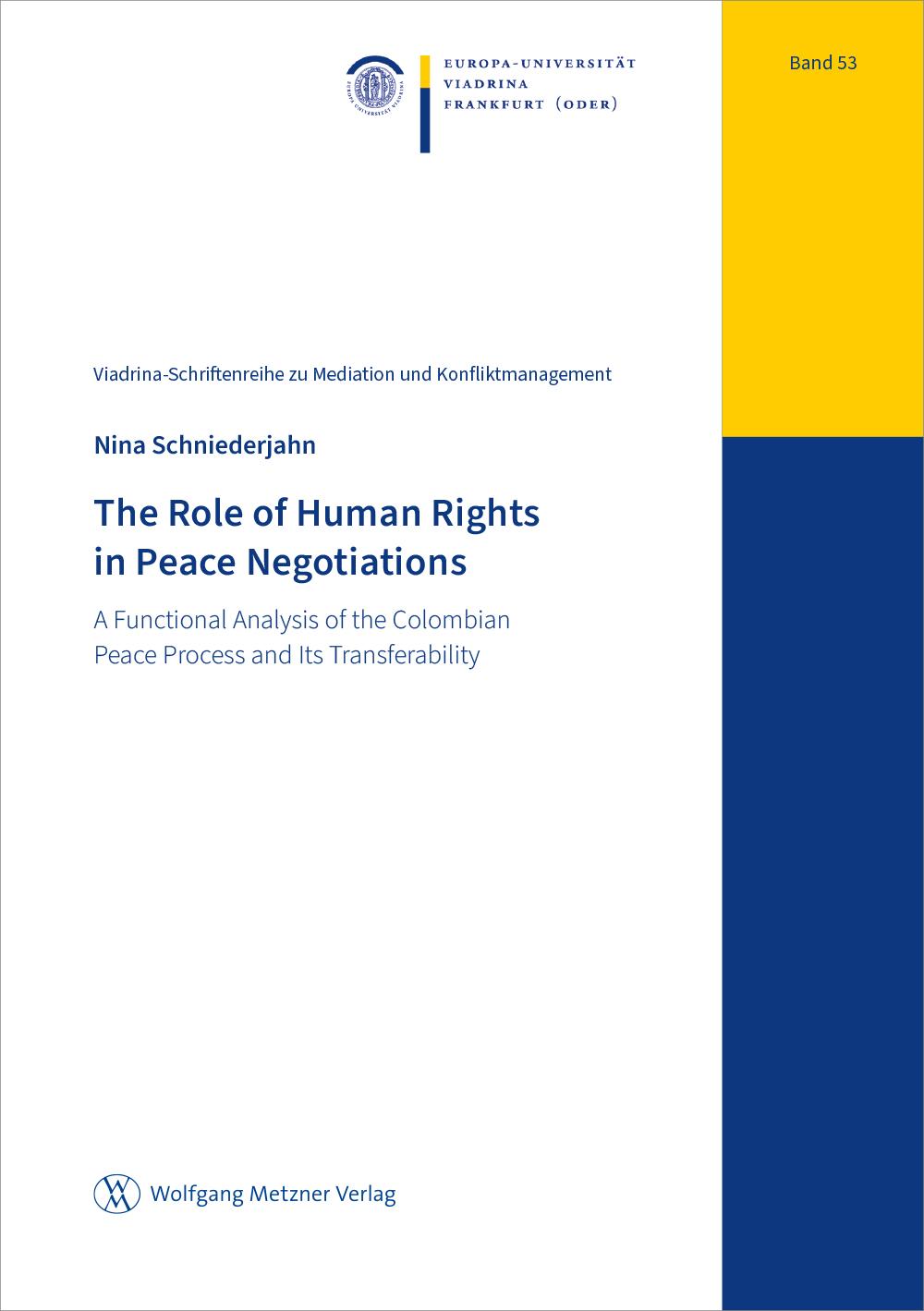
This book examines the role of human rights in peace negotiations through an in-depth analysis of the Colombian peace process. It develops a functional analytical framework and shows how human rights shaped conflict analysis, trust-building, legal boundaries, and the design of transitional justice mechanisms. Beyond the Colombian case, the book explores the extent to which these insights can be transferred to other conflict settings, with particular attention to Sudan. By comparing different political and societal contexts, it highlights both the potential and the limits of applying human rights-based approaches across diverse negotiation environments. The analysis shows that human rights can strengthen the legitimacy, inclusiveness, and overall quality of peace negotiations when applied in a context-sensitive, participatory, and flexible manner that reflects the specific political and societal conditions of each setting.
Bibliographie